Radiotherapy
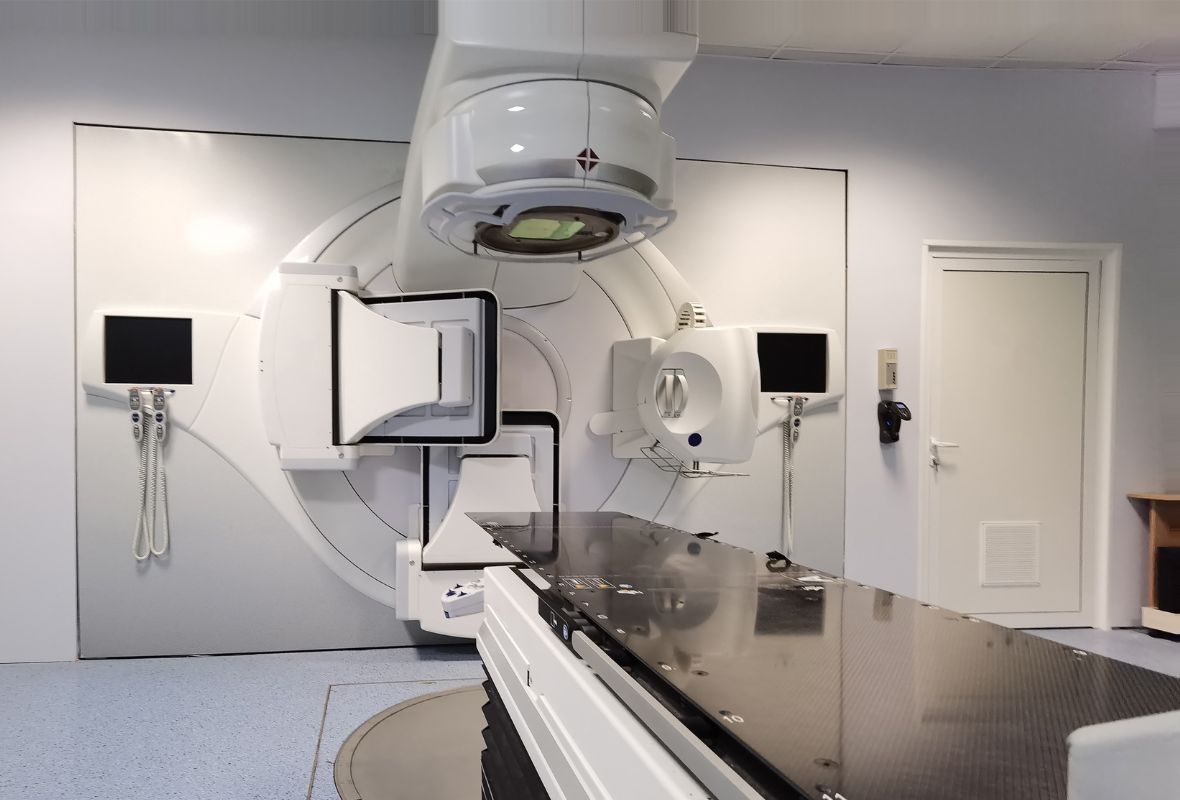
This is the use of radiation to destroy cancer cells. It can be external (radiation directed at the area to be treated) or internal (brachytherapy: a radioactive source placed in direct contact with the tumour).


Cervical cancer is a disease that develops slowly from precancerous lesions. What makes this cancer particular is that it is largely preventable thanks to regular screening and vaccination against HPV (Human Papillomavirus).
Precancerous lesions (CIN) These are the early stages, before the cancer appears. Three grades are distinguished:
Squamous cell carcinoma This is the most common form (around 80% of cases). It develops from the cells that line the surface of the cervix. This type of cancer generally develops slowly and can be detected early by the smear test.
Adenocarcinoma Rarer (around 20% of cases), it develops in the glands of the cervical canal. This location sometimes makes it more difficult to detect during standard screening. It often affects younger women than squamous cell carcinoma.


Vaccination prevents infection by the main types of HPV responsible for the cancer. It is recommended:
• For girls and boys from the age of 11
• As a catch-up until the age of 19
• Up to the age of 26 in certain specific situations
The HPV virus is responsible for more than 99% of cervical cancers. Among the many types of HPV, some are described as "high-risk" because they can cause cellular changes that may progress to cancer. Persistent infection with these HPV types is necessary for the cancer to develop.
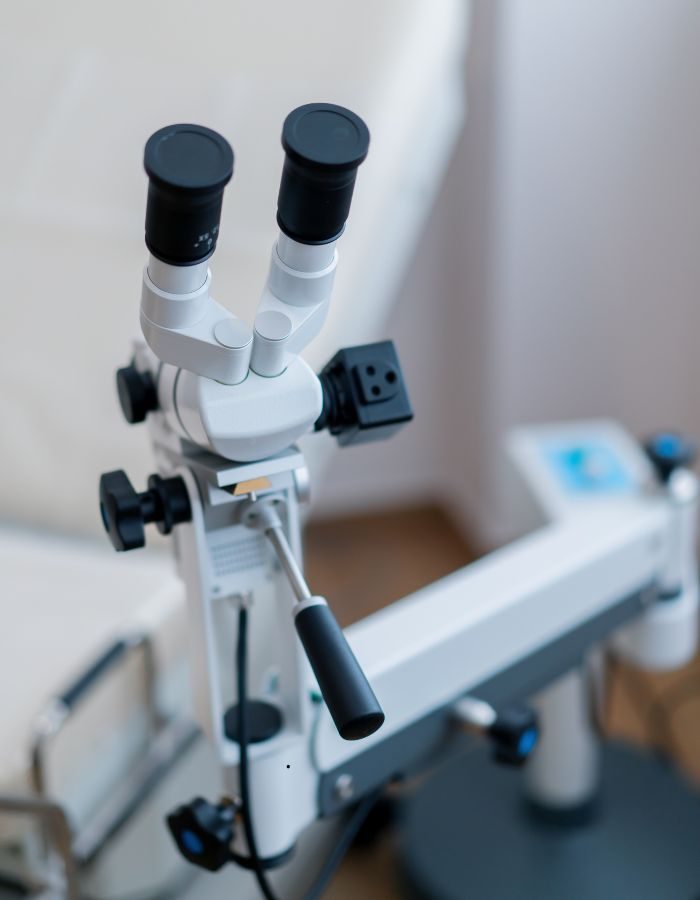
The cervical smear test A simple, painless examination that detects cellular abnormalities: • To be carried out every 3 years between the ages of 25 and 30
• Then an HPV test every 5 years between the ages of 30 and 65 Colposcopy Colposcopy is an examination that allows the cervix to be observed in detail using a special microscope. After applying products that stain the tissues, the doctor can precisely identify suspicious areas and, if necessary, take small samples for analysis. The examination takes around 15 minutes and is not painful, although the gynaecological position can be uncomfortable. This examination is carried out in the event of:
• An abnormal smear test
• A positive high-risk HPV test It allows the cervix to be examined in detail and biopsies to be taken if necessary.

This is the most common operation for treating precancerous lesions. It consists of removing a cone-shaped part of the cervix to take away the entire suspicious area. This operation:
Several types of operation are possible depending on the stage:
This is the use of radiation to destroy cancer cells. It can be external (radiation directed at the area to be treated) or internal (brachytherapy: a radioactive source placed in direct contact with the tumour).
Drug treatment that destroys cancer cells throughout the body. It is given by infusion, generally in several cycles a few weeks apart.
This is the combination of radiotherapy and chemotherapy at the same time. This combination reinforces the effectiveness of both treatments for certain stages of the cancer.
The smear test is a simple, painless examination that consists of gently collecting a few cells from the cervix using a small brush. These cells are then analysed under a microscope to detect any abnormalities. The examination takes only a few minutes.
It is a test that looks directly for the presence of the HPV virus on the cervix. It is performed in the same way as a smear test, but the analysis looks for the DNA of the virus rather than for cellular abnormalities. It is more sensitive than the standard smear test after the age of 30.
Screening begins at 25, even if you have been vaccinated against HPV. Between the ages of 25 and 29, a smear test is carried out every 3 years. From the age of 30, an HPV test is carried out every 5 years if the result is negative.
- From 25 to 29: a smear test every 3 years
- From 30 to 65: an HPV test every 5 years This frequency can be adapted according to your personal risk factors or if an abnormality is detected.
Condoms reduce the risk but do not protect completely, because the virus may be present on areas not covered by the condom.
Colposcopy is an examination that allows the cervix to be observed using a special microscope (a colposcope). The doctor applies different solutions that stain the tissues to better visualise potentially abnormal areas. The examination takes around 15 minutes.
No, a biopsy is only taken if the doctor observes suspicious areas during the examination. In that case, a very small fragment of tissue (2-3 millimetres) is removed for analysis to confirm or rule out the presence of a lesion.
Colposcopy is not painful, but the gynaecological position can be uncomfortable. The biopsy may cause a brief pinching sensation. Some women feel mild cramps for a few hours after the examination. Slight bleeding is possible in the days following a biopsy.
A positive HPV test simply means that the virus is present on the cervix. It is a very common infection that clears up spontaneously in 80% of cases. A positive test does not mean that you have or will have cancer, but that appropriate monitoring is necessary.
HPV is transmitted mainly during sexual intercourse, through direct contact between mucous membranes.
A positive HPV test does not mean infidelity: the virus can remain "dormant" for years before being detected, and it is impossible to date the moment of infection. The vast majority of sexually active adults encounter this virus during their lifetime.
Vaccination is recommended for girls and boys from the age of 11. It is all the more effective when carried out early, before the start of sexual activity. Catch-up vaccination is possible up to the age of 19, and up to 26 in some cases. Vaccination does not remove the need for regular screening in adulthood.
Vaccination can still be useful even after the start of sexual activity, because it protects against several types of HPV. Talk to your doctor, who will assess its value in your situation.
No, absolutely not. The majority of HPV infections disappear spontaneously without causing lesions. It is the persistence of a high-risk HPV infection over several years that can, in some cases, lead to the appearance of precancerous lesions. This is why regular monitoring is important.
Conisation is a surgical procedure that consists of removing a small, cone-shaped part of the cervix, where the lesion is located. It is performed under local or general anaesthesia, takes around 20 minutes and completely removes the area containing the abnormal cells.
In the vast majority of cases, conisation has no impact on fertility. It is entirely possible to have pregnancies after this operation. However, it is important to inform your gynaecologist during a future pregnancy, as special monitoring of the cervix may be necessary.
After a conisation, regular monitoring is set up to ensure complete healing. A first check is carried out at 3-4 months with an HPV test and/or a smear test. If these examinations are normal, annual monitoring is maintained for 2 years, after which the usual screening schedule resumes.
Many associations offer valuable support and guidance throughout your journey. Click here to discover a selection of patient associations that can accompany you.